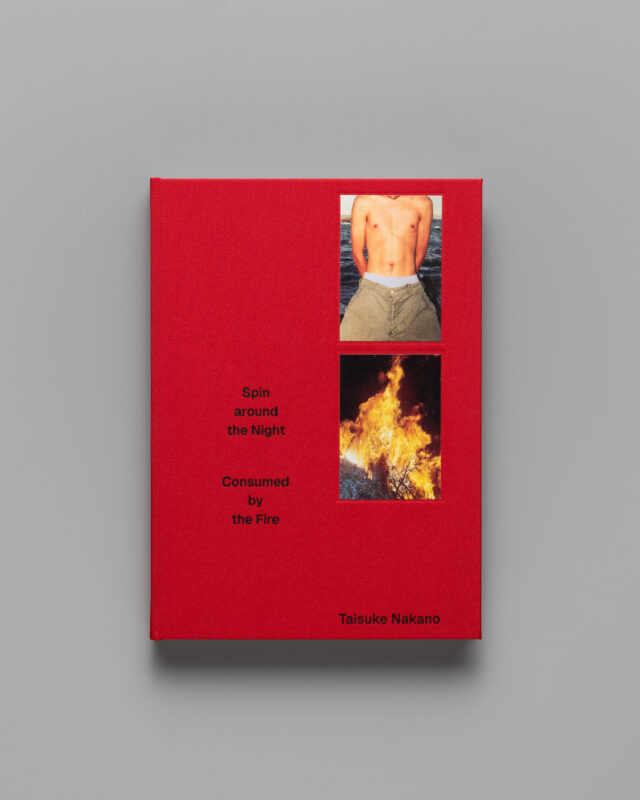
Taisuke Nakano
TOKYO TRAIL CAM
Back in 2000, a 33-year-old gay man was murdered at a popular Tokyo cruising spot. The story was sensationalized in the Japanese media, and exposed gay-bashng as a systemic issue, with real gaps in legislation protecting queer people. 25 years later, photographer Taisuke Nakano took that night as a starting point for his dreamlike series ‘Spin Around the Night Consumed by the Fire’. He strapped trail cameras to trees, blurring fiction and reality as he searched for answers about what might have happened. Taisuke sent us a copy of his gorgeous new photobook and we wanted to know more!
Colin: The book was inspired by a tragic murder in Yumenoshima Park. Could you tell me more about that?
Taisuke: The perpetrators had been targeting gay men there, threatening and robbing them. In Japan this kind of violence was referred to as “homo-gari”, or “gay hunting”. What made the case particularly personal for me was that one of the perpetrators had the same name as me!
Wow. Was it a widely reported case in Japan at the time?
It became an important case in thinking about violence against gay men in Japan, but more than 25 years later I don’t think anyone outside the queer community remembers it, or even among younger gay people in Japan. So I wanted to connect what happened there with those places in Tokyo today.
So you spent a lot of time in nighttime cruising spots!
When I am looking for someone myself in cruising parks, I sometimes feel like a nocturnal animal, or even a hunter. So I chose to use infrared trail cameras, like the kind used to photograph wild animals. I actually wore the camera on my body at first, but going to cruising parks every night started to interfere with my daytime work, so I eventually began attaching them to trees and bushes, and they automatically took pictures when they detected movement.
What did you find when you went to pick them up in the morning?
It’s easy to figure out when cruising has started, but much harder to know when it ends. One morning, I went to collect a camera at around 5AM and there were still people cruising. They apparently thought I had come to cruise too, and they chased me around for about half an hour. For a moment I thought, maybe I should just join them, but honestly, I really wanted to collect my camera and go back to sleep.
There’s something very ghostly happening in the pictures.
Sometimes the cameras also photographed completely empty spaces. Technically, I assume these were probably triggered by a branch moving in the wind, but I started imagining that the murdered man might still be wandering through the park, and that he might have passed in front of the infrared camera.
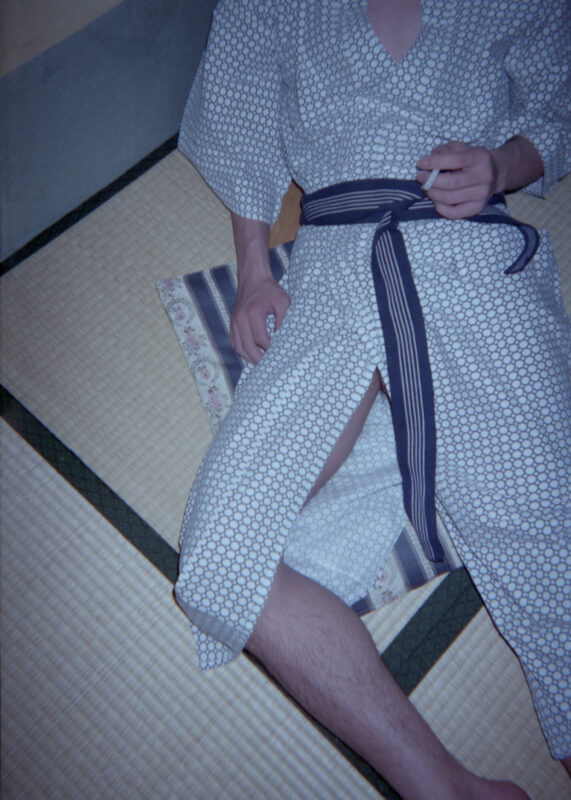
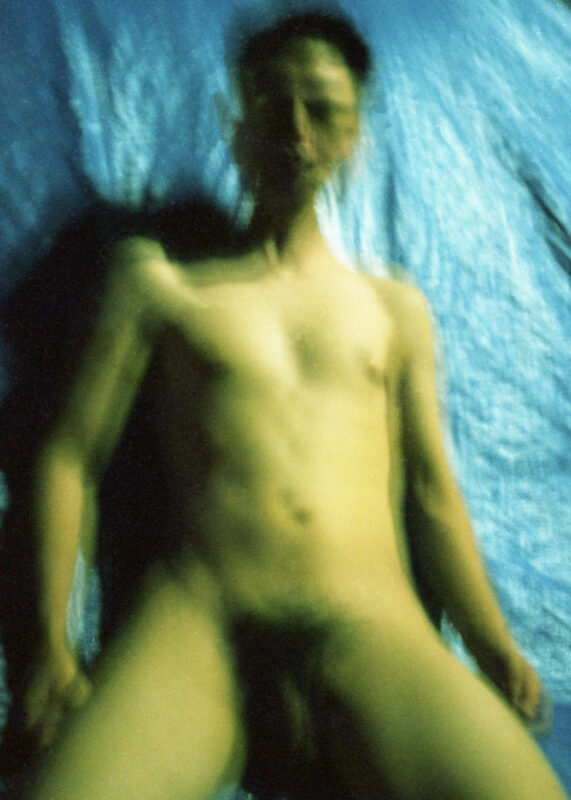
The second half of the book is all color photos. Who’s in these?
The fact that the crime had been committed by men who were understood to be straight against gay men kept bothering me, so I wanted to bring some straight men into the work — the naked pictures you see are all straight that I had met through work, and sometimes even people I happened to pass on the street. The locations were also decided through a kind of chain of associations from interviewing older queer people that I’d met in bars, LGBTQ+ organizations, parks and other places.
The further I flip through, it becomes increasingly dreamlike.
So I don’t really think of the book as being about the murder itself, or about a social issue. The murder was the starting point, but from there, the work began to open up into multiple directions. I was thinking about desire, death, the body, loneliness, memory and things that we cannot see.