
The Stonewall Jukebox
A stacked soundtrack for revolting queers
Last year, the Trump administration removed the big ol’ rainbow flag from the Stonewall National Monument in New York amidst a nationwide crackdown on what can and can’t be flown on Federal sites. The ensuing shitstorm showed how the memory of Stonewall still carries political weight, even if storytelling around ‘who threw the first brick’ can feel played out. Yes, ‘Stonewall was a riot’, but it was also mix-y bar with its own culture and – like any good spot to catch a drink and a kiss – good music.
Thankfully, queer-history-obsessed deejay Chris Cruse has hunted down hundreds of songs about rebellion and love, many from queer pioneers of the 60s, that may have been playing there the night of the uprising. Present day icon Miss Honey Dijon then narrowed it to a selection of 100 tracks to be installed in a replica of the original jukebox at the Stonewall National Monument Visitor Center. Presented here for your Pride-month pleasure is a shortlist of 14 tracks, accompanied by the speech Chris gave at a listening session during Berlin CSD in 2025, and again at the Queer Nightlife Community Center in NYC a couple of weeks ago. Hit it!
Let’s teleport to more than 50 years ago in the United States, back to a time of mass protests, sit-ins and marches against racial segregation and discrimination, youth-led opposition to the Vietnam War, in a time when anti-communist propaganda and nuclear war dominated the media. This was a time when being a homosexual was still illegal, with actual laws against gay sex among consenting adults, and against suspected cruising under the guise of “loitering”. You could actually be arrested if you didn’t wear at least three articles of clothing that were “appropriate” for the gender you were assigned at birth. It was illegal for people to serve suspected homosexuals alcohol, and illegal for people of the same sex to dance together.
But there was something in the air towards the end of that decade. The famous Summer of Love in 1967 was the same year as the racially motivated raids that led to the Detroit Riots. The murder of Martin Luther King, Jr. came in 1968. In 1969, 400,000 people would famously gather for the counter-cultural Woodstock music and arts festival in upstate New York. That same year, an uprising by the queer community in NYC would embolden activists across the US to stand up for their own basic human rights. The riots and demonstrations that continued for days following police raids on the Stonewall Inn on the early morning of June 28, 1969 were a watershed moment for the queer movement. And while it was not the first time the community had resisted, it has become the most notorious.
We’ve seen what Stonewall looked like, but what did it sound like?
Rather than replicating exactly what was in the jukebox the night of the raids – some of the songs that were supposedly in there aren’t so worth remembering – the following selection of songs reflect what was going on and in the air at the time. These are songs that kept queer bodies moving – songs of revolution, songs by queer pioneers, songs of joy and liberation. The only other criteria was that they had to have been available on 7” before the night of the police raids on June 28, 1969. Remember, this was a different sounding era: pre-disco and pre-drum machines.
The Stonewall Inn wasn’t necessarily a romantic paradise or some fabled Xanadu for the queer community. It was essentially a shabby mafia-run bar with watered-down, overpriced drinks, where the cops were paid to leave them alone. The Stonewall was popular among gays, drag queens, trans folks, hustlers, and homeless youth who committed the heinous crimes of meeting up, laughing, drinking, dancing, hooking up, and falling in love. So occasionally, despite the payoffs, the police would still raid the bar just to remind everyone exactly who was in charge.
Let’s go check it out…

Connie Francis, ‘Follow the Boys’ 1963
You can imagine that the song ‘Follow the Boys’ would become an instant hit in gay male circles – both due to its campiness and well, the lyrics. Connie Francis was super popular in the 60s, and this was the theme song to a 1963 film she starred in called… ‘Follow the Boys’. She also had another beloved hit called “Where the Boys Are,” from her film called…Where the Boys Are. Later in her life when she performed the song live, she would introduce it as “the gay national anthem.”
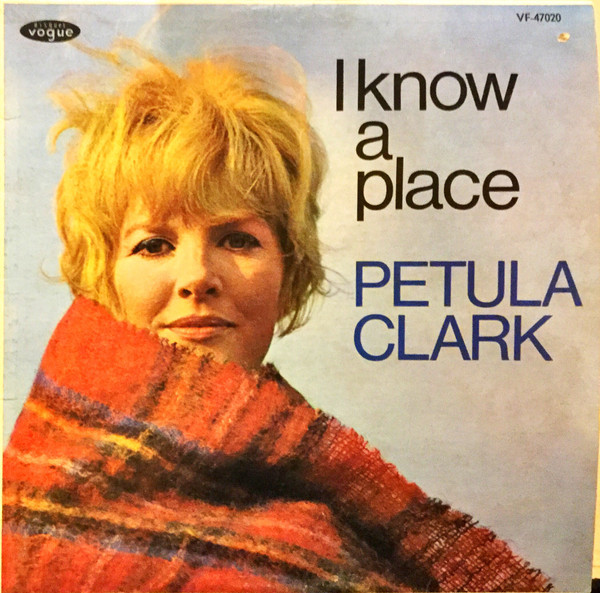
Petula Clark, ‘I Know A Place’ 1965
Petula Clark won a Grammy for this track. It paints a picture of a place, perhaps a bit secret, that’s waiting for you once the obligations of the day are through. Life wasn’t so pleasant for many closeted queers back then, and it could be dangerous for those who couldn’t hide who they were. Songs like this, where people saw themselves in the lyrics, offered emotional lifelines – and a reason to dance a little harder when they came on the jukebox. Maybe they felt these pop singers were winking at them, that they were part of the story. The lyrics evoke a longing for escape and sanctuary: a place of your own, with music and friends who are just like you.
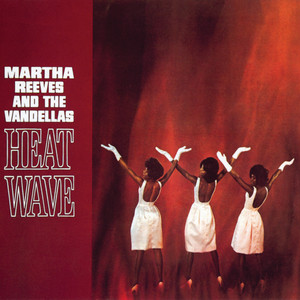
Martha Reeves & The Vandellas ‘(Love Is Like A) Heat Wave’
‘Heat Wave’ was featured in William Friedkin’s 1970 film ‘The Boys in the Band’, which was one of the first mainstream depictions of “normal” modern gay life on screen. The scene that features this song takes place on a rooftop patio in Manhattan, with a handful of gay friends (frenemies?) listening to music, pouring drinks and talking shit while waiting for the birthday boy to arrive. When the song comes on, one guy says, “Hey remember that dance we used to do at Fire Island?” And then he starts doing a line dance known as the Madison. One by one they all jump up and join in, laughing, twirling around, grabbing each other’s asses. Getting to see gay men at a house party on screen, enjoying each other like this, was a really big deal for the 1970s. But despite these private moments of joy, ‘The Boys in the Band’ isn’t a super happy film for the gays. It features the famous line: “Show me a happy homosexual and I’ll show you a gay corpse”.
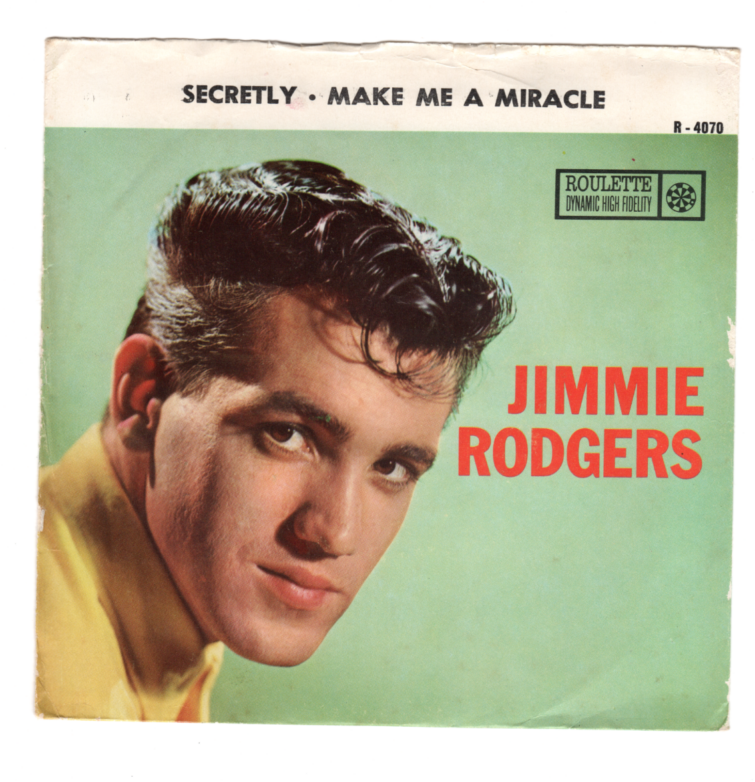
Jimmie Rodgers, ‘Secretly’ 1958
‘Secretly’ is about wanting to share your love a bit more openly, which for some reason the singer Jimmie Rodgers wasn’t able to do. Rodgers himself wasn’t known to be any kind of gay, but the song is remarkable for the time for its genderless lyrics which allows you to imagine anyone as the object of affection. I can imagine this one really hit home for the gays and gals at Stonewall, yearning for a time when they didn’t have to hide behind blackened windows at a mafia-run bar, for a time when they could walk down the street hand in hand, or when they could fuck freely the bushes.
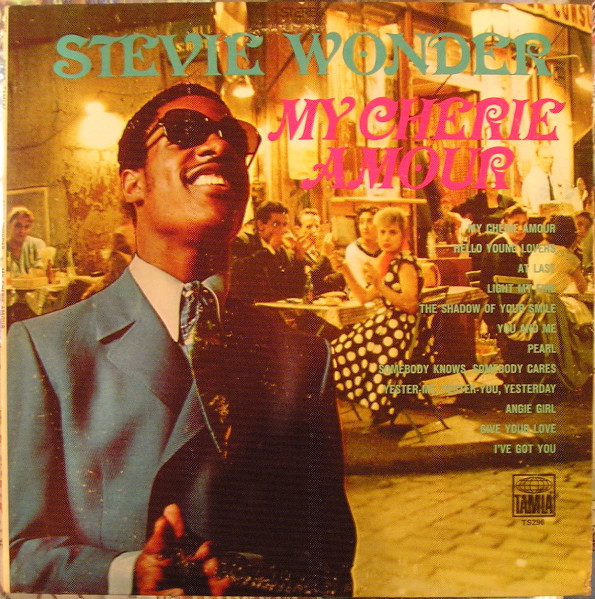
Stevie Wonder, ‘My Cherie Amour’ 1965
‘My Cherie Amour’ by Stevie Wonder was reportedly in the jukebox the night of the uprising, according to the Stonewall Veterans Association. It’s a beautiful song for a slow dance – a song simply about love.
After our jukebox project was completed, Miss Honey Dijon was interviewed about the curation of the songs, and about this Wonder track she said: ‘How radical love was then as a concept – of who you chose to love and how you chose to love…I love the fact that these songs that were at Stonewall were about love, because love is radical. Love is not easy, love is an act of rebellion, love is comforting, love is joy, love is hard, love is complicated. But isn’t that why we’re all here – to express love?’.

Nina Simone ‘My Baby Just Cares for Me’ 1930
‘My Baby Just Cares for Me’ comes from Nina Simone, an uncompromising pianist and singer, and an important voice in the Civil Rights movement. She was also one of us queers. She wrote in her autobiography about hot moments with both men and women in her life, and that she felt comfort and a sense of belonging in gay bars.
The song was originally written for the 1930 film ‘Whoopee!’ and performed by Eddie Cantor – a white man – in blackface. In 1957, Ms. Simone woke the song back up, rewrote some choice lyrics, and stylized the song to suit her own preferences. In her version, she acknowledges the possibility of lust for the same gender when she mentions that her “baby” doesn’t fall for the smile of famous gay pianist Liberace – which was a bit edgy for 1957. The song didn’t chart at the time, but 30 years later – in 1987 – it became a top 10 hit in the UK after it was used in a Chanel No. 5 perfume ad. Go figure.
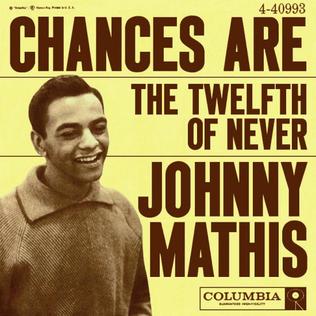
Johnny Mathis ‘Chances Are’ 1957
‘Chances Are’ was written in 1958 by Johnny Mathis who, at the time, was a 22-year-old super babe. The song sold over a million copies, and over his long career he was one of the best-selling recording artists of the 20th century. He’s also a homosexual. He “accidentally” came out in a 1982 interview with US Magazine, which led to people mailing him death threats. It obviously really rocked some people to the core to learn his truth. Although he wasn’t out and proud at the time this song came out, it’s kind of delicious to think about who he must have been imagining when he sang it.

Lesley Gore ‘You Don’t Own Me’ 1963
Lesley Gore recorded this when she was just 17 years old. They asked her what she was going to do with all the money she made from these songs, and she said: “I’m gonna go to college.” And go to college she did – Sarah Lawrence College. If you know anything about Sarah Lawrence College, it should come no surprise that at age of 20 she realized she was attracted to women. She didn’t come out publicly until much later in life, but said she never tried to hide her sexuality.
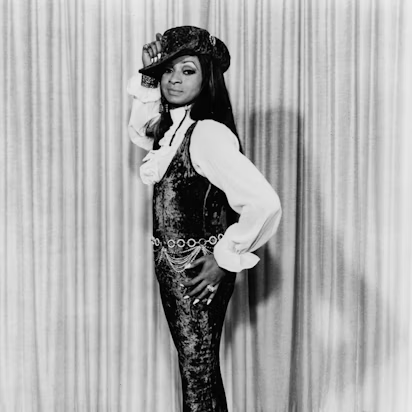
Jackie Shane – ‘Any Other Way’ 1963
Jackie Shane was a trans pioneer, living her entire life as a woman at a time when doing so seemed unthinkable. Born in Nashville in 1940, Jackie’s mother didn’t quite know what to do with her. She ended up being raised by her aunt, who was much more supportive of her, and she ultimately developed a confidence in her femininity from a young age.
After spending the early 1950s in Nashville, and subsequently joining the circus, she crossed the border into Canada. In no time she ended up on a stage in Montreal, and soon she was fronting a band. She sold out shows week after week in Montreal with her seductive purrs and growls, and her commanding and electrifying onstage presence. She recorded the song “Any Other Way” in 1963. Local radio stations in Canada wouldn’t play the song at the time because the stations were racist. But people requested and requested! Eventually the radio stations gave in, but the label didn’t even put her on the cover so no one would know she was black. It became a bonafide hit.
The lyrics for ‘Any Other Way’ ride the line between what was considered acceptable, and her live audiences who saw her dressed as a woman likely understood what she was getting at – her message being: I’m good, don’t mess with me. At the height of this song’s success, she was invited to perform on the Ed Sullivan late night show, but they told her she couldn’t do the song if she wore the dresses and makeup. Since she couldn’t do it her way, she refused to do the show. She wouldn’t have it “any other way”.
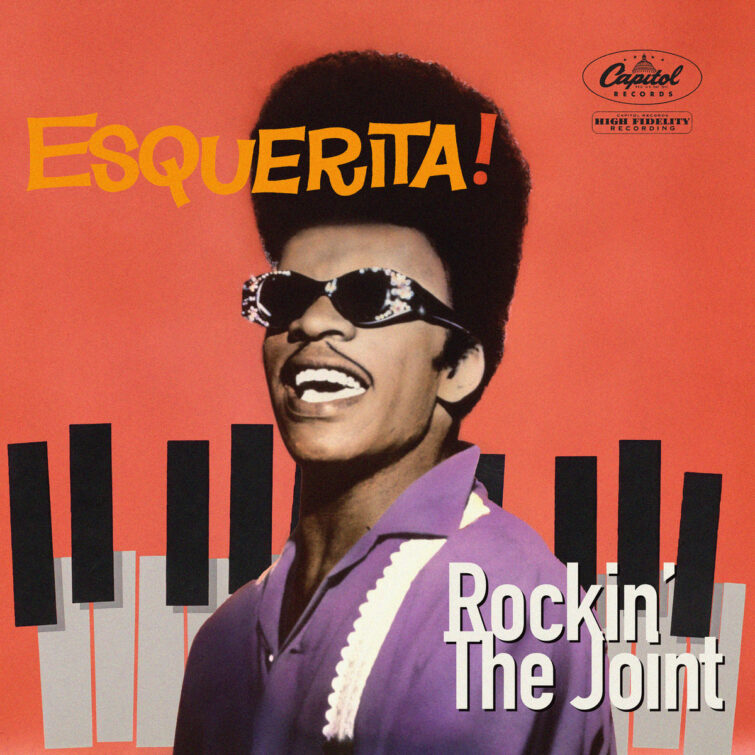
Esquerita ‘Rockin’ The Joint’ 1958
Another unapologetic, gay rocker was Esquerita, who was a huge influence on a young Little Richard. Richard had cut his first record as a singer, and was already wearing makeup and dressing up. One night, in his hometown in Georgia, he couldn’t sleep and ended up watching people get off the bus and spotted Steven Quincy Reeder, aka Esquerita, get off – almost two metres tall, 20cm high pompadour hair, Jayne Mansfield sunglasses.
Esquerita was from the South as well, and had learned to sing and play piano at the Baptist church. He stood up while he played the piano, attacking the instrument as much as playing it, while wearing rhinestone gowns and capes on stage. He wore two wigs to get his hair that high. Esquerita got a record deal at Capitol Records, and performed with Jimi Hendrix, Allen Toussaint, and off and on with Little Richard throughout his career. In the late 70s and early 80s he was down on his luck, eventually seen washing car windshields for tips. Esquerita’s father confirmed that his son died of AIDS related complications in 1986.
It’s frustrating that Esquerita didn’t hit the highs that Little Richard got to, and remained relatively unknown. Some may think Little Richard stole all his swag and style from Esquerita – it’s not so clear cut though, and Richard does give credit where credit is due. What could be suggested between him and Little Richard, when they first met and got on, it was likely one of those queer moments where you see yourself in someone else, encourage more out of each other, and become better versions of yourselves.
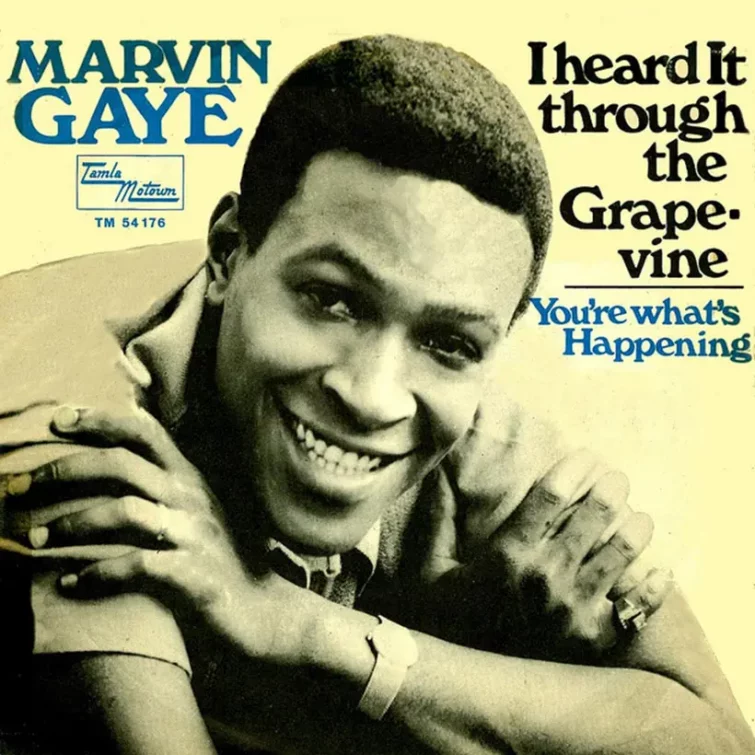
Marvin Gaye ‘I Heard it Through the Grapevine’ 1957
In 1988, ACT UP organizer Mark Harrington was arrested, and put in a jail cell next to activist Marsha P. Johnson. They were passing cigarettes back and forth (very Jean Genet) and Mark yelled through the wall: “Hey Marsha, what song was playing when the cops busted into the Stonewall?” She said, “I Heard it Through the Grapevine.”
Now, mind you, Marsha P. Johnson was not at the Stonewall Inn when the raids happened – nor did she throw the first brick – but she was a frequenter of the establishment, and joined in after the initial raid and violence had begun. She ended up playing a crucial role in the protests and riots that followed, and was extremely outspoken. She wore bright clothes, enjoyed singing, and was a real local character. She always said the ‘P’ in her name stood for “Pay it no mind”.
For us, one reading of Gaye’s song is about how much of queer life was underground: news traveled and connections were often made through whisper networks, while event producers like drag pageant organizer Flawless Sabrina set up elaborate phone trees to publicize their functions. Independent publishing and self-distribution of materials was the norm. The “Grapevine” for queers was underground, but it was robust and well-connected. It makes sense you’d likely hear the best news through the grapevine.
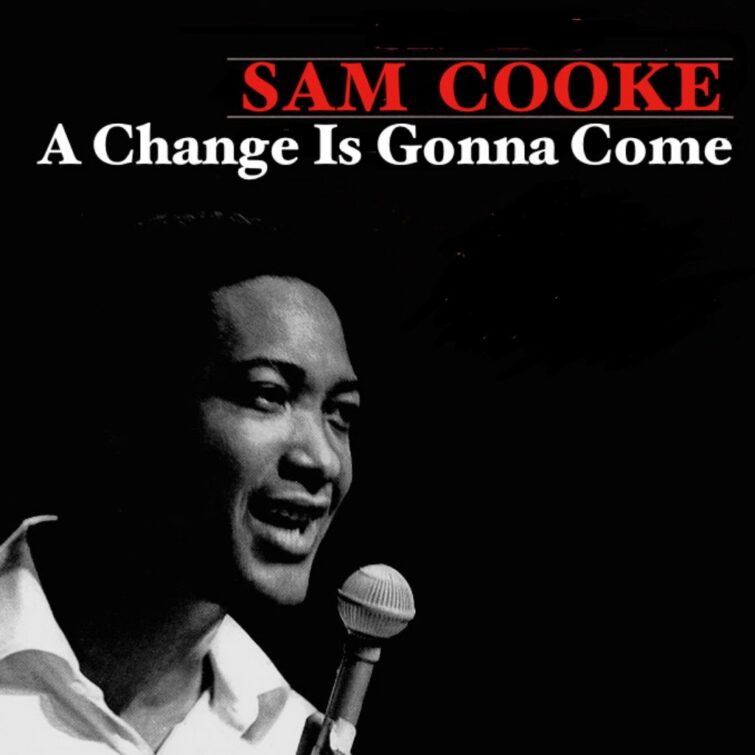
Sam Cooke ‘A Change is Gonna Come’ 1964
This next song, ‘A Change is Gonna Come’, was a Stonewall favorite, and the unofficial anthem of the Black Civil Rights movement. Sam Cooke was a well-known gospel singer who successfully made the jump to mainstream music (aka white audiences). He was often pitched as the black Frank Sinatra, but he had an instantly recognizable style that was all his own, which has since inspired many other vocalists, with Otis Redding, Marvin Gaye and even Rod Stewart all citing him as an influence.
Despite being beloved and incredibly successful, when Sam Cooke and his band would tour the American South in the late 50s and early 60s they had to play in segregated venues where white folks sat in one section while black folks sat in another. This pissed him off. Here in the South the white folks loved them when they were on stage, but when they were off stage they were treated as second-class citizens.
One night in 1964, Cooke was murdered at a Los Angeles hotel under dubious circumstances. The police considered it a “justifiable homicide.” There was only one witness. Some have suspected the mob may have been involved, or that it was a hit from his manager who had been stealing from him. Malcolm X would be murdered 3 months later, and Martin Luther King Jr three years later. His friend Muhammad Ali said “If Cooke had been Frank Sinatra, the Beatles or Ricky Nelson, the FBI would be investigating.”
A few years before his murder, Sam Cooke heard Bob Dylan’s 1962 protest song ‘Blowin in the Wind’ and was so moved by its questions about peace, war, and freedom – as well as the fact that people were responding to its message. This song wasn’t just about entertainment. It had a message. He found himself upset that he hadn’t written something like that yet himself – he had amassed an enormous white following, and he was afraid of alienating them. But by 1963 he had reached a breaking point, and decided to finally put his songwriting talents and abilities in service of his beliefs.
The composition to the song came to Cooke in a dream, and he wrote his first draft sitting on a bus in Durham, North Carolina as protest sit-ins happened at a nearby university. The song was inspired by a moment when he was turned away from a white-only hotel in Louisiana. The song signaled a shift in his songwriting into what Miss Honey Dijon likes to call “message music.” It was a perennial favorite at the Stonewall Inn, and helped set the tone, so to speak, to fight for a change whose time had come.

Sly and the Family Stone ‘Stand’ 1969
Books, documentaries and even an ill-fated Hollywood movie have been made about June 28, 1969. I thought I’d share a fragment from a first-hand account of that night instead, published in ‘Rat Subterranean News’ a few weeks after the uprising, titled “Queen Power: Fags Against Pigs in Stonewall Bust”:
“Several pigs were on guard and periodically threatened the crowd unless they moved back. Impossible to do. “Nobody’s going to fuck around with me. I ain’t going to take this shit,” a guy in a dark red tee-shirt shouted, dancing in and out of the crowd.
People hung around till after 4 AM talking in little groups. People were excited and angry. In talking to a number of kids who had been inside, it was evident most understood at least rudimentarily what was happening to them. What was and should have always been theirs, what should have been the free control of the people was dramatized, shown up for what it really was, an instrument of power and exploitation. It was theatre, totally spontaneous. There was no bullshit.”
Protests and demonstrations continued after the initial raid for five more nights, escalating in intensity and drawing larger crowds. Because the roads in Greenwich Village deviate from the standard NYC grid layout and the cops were from other precincts in the city, it was hard to corner the demonstrators. The uprising sparked the formation of new queer activist groups, most notably the Gay Liberation Front and the Gay Activists Alliance, and the first PRIDE parades were held the following year in NYC and LA.
This track, from Sly Stone, calls its listeners to stand up for themselves, and it was supposedly in the jukebox that night in June 1969. It has an unfortunate use of the term midget, but hopefully you can look past it for a moment and still receive the message.
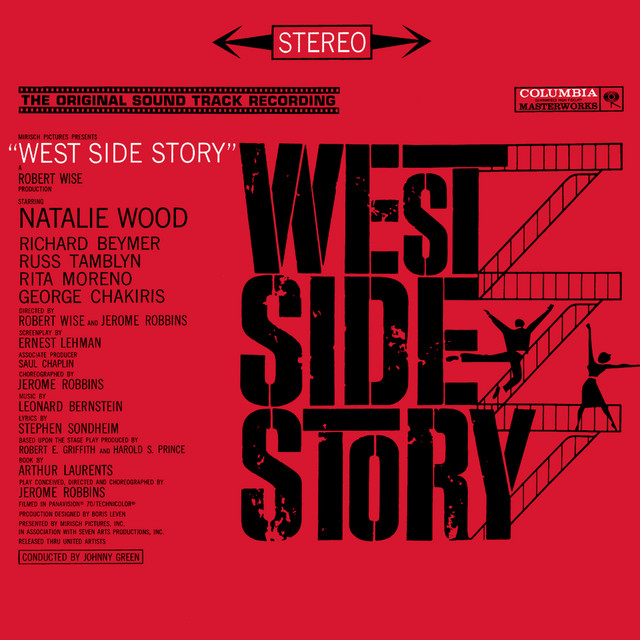
Dionne Warwick ‘Somewhere’ 1967
The grand finale was written for the musical ‘West Side Story’, with lyrics by Stephen Sondheim (a gay man) and music by Leonard Bernstein (who had affairs with both men and women throughout his life). Inspired by Romeo and Juliet, the Broadway show is about two star-crossed lovers in a multiracial blue-collar neighborhood in the Upper West Side of Manhattan. After a violent episode between rival gangs Sharks and the Jets, Maria (our Juliet) says “It’s not us…it’s everything around us.” To which Tony (our Romeo) replies, “Then I’ll take you away, where nothing can get to us.” He then begins singing this song, and eventually she joins in the duet.
‘Somewhere’ was immediately adopted by the gays, and has been an anthem since well before the gay liberation movement began. Sondheim for some reason rejected that reading, saying, “If you think that’s a gay song, then all songs about getting away from the realities of life are gay songs.” Which, I don’t know…it actually sounds pretty accurate to me! The song endures for those who feel on the edges of society, as it earnestly yearns for a place where we all belong.
Diana Ross sang the song on The Tonight Show Starring Johnny Carson in 1968, the day after Martin Luther King had been murdered, and in the middle of the song she inserted a short statement honoring King and his “I Have A Dream” speech. Other later famous covers included Aretha Franklin, Tom Waits, Marianne Faithfull, Phil Collins and Pet Shop Boys. There’s a ton of versions out there – the one we chose for the jukebox is a lesser known cover from Dionne Warwick, released in 1967, which is big and jazzy, giving a bit of bombast.
The song endured and continued to take on meaning for the queer community even after Stonewall and gay liberation. Decades later in 1992, AIDS was the number one cause of death for all U.S. men aged 25 to 44. By that point, it had taken the US government years to acknowledge the crisis due to institutional homophobia. At the Commitment to Life benefit gala for AIDS Project Los Angeles, a star-studded fundraising event where music exec David Geffen finally came out, Barbra Streisand performed ‘Somewhere’, dedicating it “to all the friends we have lost to AIDS, and to those who are afflicted by it now. And to know that we are inspired by your courage, and that we care about you and we embrace you.”
As our history and our identity is scrubbed from national monuments like Stonewall by the current US administration, as trans rights are being stripped away daily and gender markers erased from legal documents, as unchecked genocide of the Palestinian peoples continues with the support of the US and Germany, as private investment companies fund innovations in surveillance and weapons, and as policies to reverse climate change are dissolved…this yearning for a place for us somewhere endures.
It’s been said that if you don’t know where you came from, you can’t know where you’re going. It’s essential in our queer history to organize and fight. These were the songs of a revolution. What will our songs be?